Description
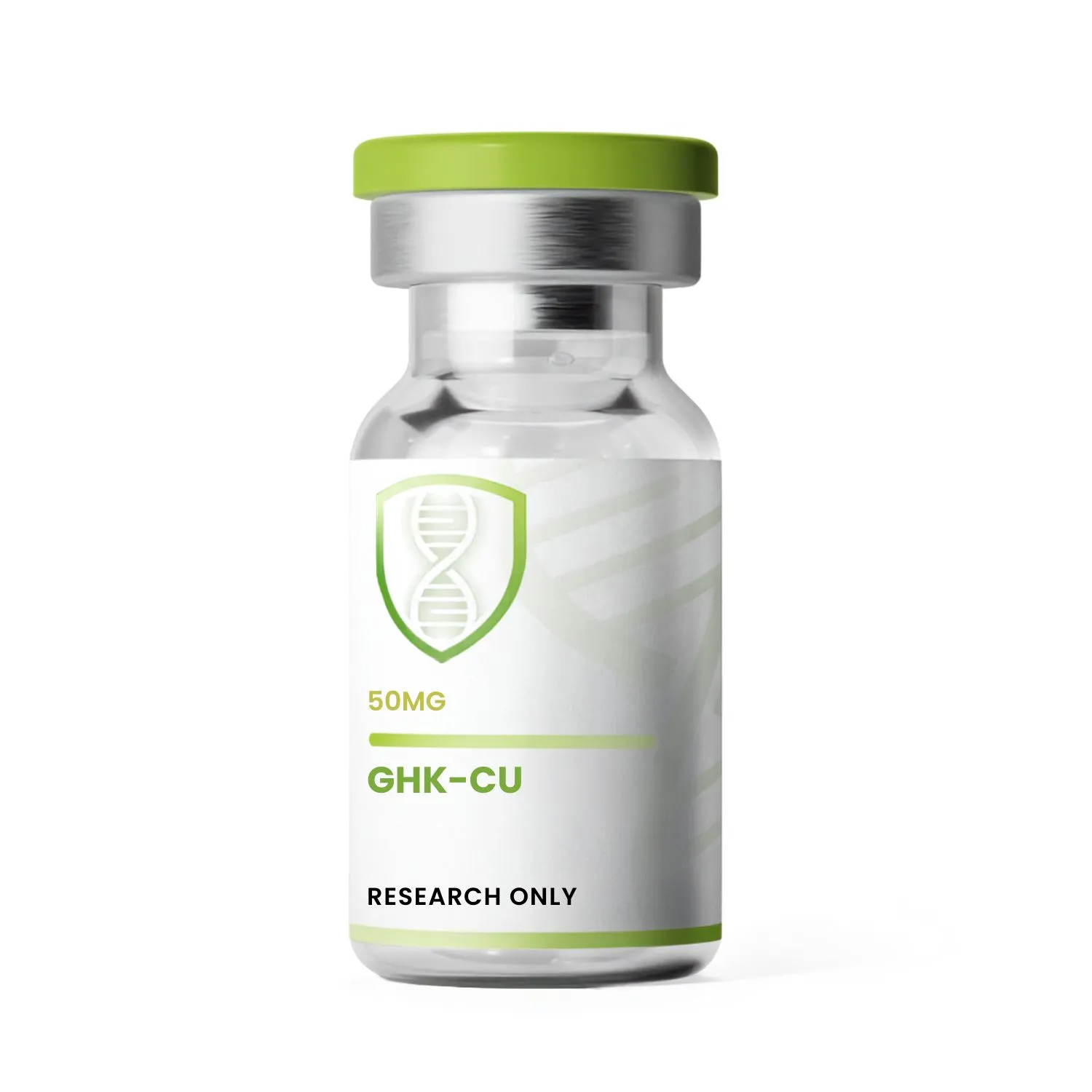
GHK-Cu 50mg Copper Peptide For Sale
GHK-Cu is a small copper-binding peptide studied in laboratory research. The peptide is associated with the amino acid sequence Gly-His-Lys. It naturally occurs in biological fluids, including human blood, saliva, and urine.
GHK-Cu research focuses on how small peptides interact with copper, cells, proteins, and biochemical pathways. Researchers use controlled laboratory models to study these interactions and observe cellular responses.
This GHK-Cu 50mg Copper Peptide For Sale product is intended strictly for research use. It is not a drug or dietary supplement. It is not intended for human or animal consumption.
For researchers looking for additional compounds, explore our research peptide collection.
What Is GHK-Cu?
GHK-Cu is commonly described as a copper peptide based on GHK, a small tripeptide made from glycine, histidine, and lysine.
The sequence is:
Gly-His-Lys
GHK has a strong ability to bind copper ions. The resulting copper-peptide complex is commonly referred to as GHK-Cu. Chemical databases list GHK and copper-bound GHK as distinct chemical forms, so researchers should identify the exact material used in an experiment.
GHK was first reported in human plasma research in the 1970s. Since then, researchers have continued to investigate its biochemical properties and cellular interactions.
You can also browse our all peptides collection for other research compounds.
GHK-Cu 50mg Biochemical Characteristics
The product is identified as GHK-Cu 50mg.
The supplied biochemical information describes the peptide using the following characteristics:
- Amino acid sequence: Gly-His-Lys
- Molecular formula supplied: C14H24N6O4Cu
- Molecular weight supplied: approximately 340.3 g/mol
There is an important chemistry distinction to note. Public chemical databases list the free GHK peptide at approximately 340.38 g/mol. They also list copper-bound forms separately, with different molecular compositions and molecular weights.
Therefore, researchers should always verify the exact chemical form and specification on the relevant product documentation before using a compound in an experiment.
For more research materials, visit our complete peptide category.
GHK-Cu in Laboratory Research
Researchers study GHK-Cu in controlled laboratory environments. These studies can examine how the peptide interacts with cells, proteins, copper, and other molecular components.
Laboratory research may use cell cultures or other experimental models. Scientists can then observe biological responses under defined conditions.
The results can depend on several experimental factors. These include the cell type, research model, compound concentration, exposure conditions, and study design.
For this reason, observations from one laboratory model should not automatically be applied to another model.
GHK-Cu has a long research history. Early work investigated small peptide factors found in human plasma and their effects in cultured cells. Later research examined the structure of GHK and its relationship with copper.
Researchers interested in related compounds can explore our research peptide products.
Research Applications of GHK-Cu
GHK-Cu research covers several areas of cellular and biochemical investigation.
Scientists may examine cellular growth patterns. They may also study protein interactions, enzyme activity, gene expression, and copper-related mechanisms.
These investigations help researchers understand how a small copper-binding peptide behaves within experimental systems.
Research conditions can vary widely. A cell-culture experiment is different from an animal study. An animal model is also different from a human study.
Therefore, research findings should always be interpreted within the context of the experimental model.
GHK-Cu has also been discussed in research involving cellular signaling and tissue-related processes. However, these areas remain subjects of scientific investigation and should not be presented as established therapeutic effects of this research material.
For additional laboratory compounds, see our all peptide products.
Mechanistic and Pathway Research
One important area of GHK-Cu research is copper binding.
GHK can interact with copper ions through chemical coordination. Researchers study this interaction to understand how the peptide and copper complex behave in biological systems.
Laboratory studies can also investigate how copper-related processes interact with cellular pathways.
Researchers may examine:
- Copper-peptide interactions
- Protein activity
- Enzyme interactions
- Cellular signaling
- Gene expression
- Biochemical pathways
- Cellular responses
The exact observations depend on the research model and experimental conditions.
This makes GHK-Cu useful as a subject of biochemical investigation. However, research findings should remain separate from clinical claims.
Explore our broader research peptide range when comparing compounds for laboratory research.
Preclinical Research Context
GHK-Cu has been studied using different experimental models. Preclinical research can include cell-based investigations and other laboratory systems.
Researchers may measure changes in cellular activity, protein interactions, biochemical markers, or copper-related processes.
Such studies can provide information about molecular behavior. They do not, by themselves, establish human clinical outcomes.
Results can also vary between experimental systems. Factors such as cell type, concentration, exposure time, and methodology can affect observations.
For this reason, GHK-Cu should be viewed within its research context. The available literature includes both historical laboratory work and more recent reviews of its biochemical and biological properties.
Researchers can find additional compounds in our research peptide collection.
GHK-Cu 50mg Research Material
This product is identified as GHK-Cu 50mg.
The supplied product information describes GHK-Cu as a small copper-binding peptide intended for laboratory research.
The available product information includes:
- Product: GHK-Cu
- Quantity: 50mg
- Peptide sequence: Gly-His-Lys
- Research classification: Research use only
- Primary research context: Biochemical and cellular research
No additional product specifications should be assumed beyond the information provided.
This approach helps researchers distinguish confirmed product information from general information about GHK-Cu in scientific literature.
You can browse our full selection of research peptides to compare other available compounds.
Analytical Research Considerations
Analytical testing is important when researchers evaluate peptide materials.
Common analytical approaches can include identity confirmation and purity analysis. Researchers may also examine copper content when studying copper-containing peptide complexes.
Analytical methods help researchers determine whether the material matches the expected compound characteristics.
However, analytical results should always be interpreted according to the specific chemical form being tested. GHK and copper-bound GHK-Cu are chemically distinct forms.
For this reason, researchers should review the relevant product documentation before beginning an experiment.
Our all peptides category provides access to additional research compounds.
Why Researchers Study GHK-Cu
GHK-Cu has attracted research interest because it combines a small peptide structure with copper-binding chemistry.
The GHK sequence contains three amino acids:
Glycine + Histidine + Lysine
The histidine residue is particularly relevant to copper coordination. Researchers study how this chemical relationship affects the behavior of the resulting copper-peptide complex.
This creates several research questions around molecular interactions, copper handling, cellular signaling, and biochemical activity.
The long history of GHK research also provides researchers with a substantial scientific background for further investigation.
For researchers comparing peptide compounds, our research peptide selection offers a convenient starting point.
GHK-Cu 50mg Frequently Asked Questions
What is GHK-Cu 50mg?
GHK-Cu 50mg is a research compound containing GHK-Cu. GHK is associated with the Gly-His-Lys peptide sequence and has copper-binding properties.
What is the GHK-Cu amino acid sequence?
The GHK sequence is Gly-His-Lys. Public chemical databases identify glycyl-L-histidyl-L-lysine as a tripeptide.
What do researchers study GHK-Cu for?
Researchers study GHK-Cu in biochemical and cellular research. Areas of investigation include copper binding, cellular responses, protein interactions, enzyme activity, and related molecular pathways.
Is GHK-Cu a drug or supplement?
No. This product is presented for research use only. It is not a drug or dietary supplement.
Is GHK-Cu intended for human consumption?
No. This product is intended strictly for laboratory research and is not intended for human or animal consumption.
What quantity is this product?
This product is identified as GHK-Cu 50mg.
What is the molecular weight of GHK?
Public chemical databases list the molecular weight of GHK at approximately 340.38 g/mol. Copper-bound forms are listed separately and have different molecular compositions.
Research Use Only
GHK-Cu 50mg is intended strictly for laboratory research use only.
It is not intended for human or animal consumption. It is not intended for diagnostic or therapeutic applications.
Researchers should use appropriate laboratory procedures and follow applicable institutional requirements when handling research compounds.
References
Pickart L, Thaler MM: Copper peptide in human plasma. Science. 1973;180(4088):868–870.
Hong SJ, Kang SS, Dan DH: Effects of copper-peptide complexes on cultured cells: biochemical modulation studies.
Pickart L: Peptide-copper complexes and gene expression modulation. Molecular and Cellular Biochemistry. 2006;286(1–2):1–15.
For additional scientific background, researchers can also consult the PubChem records for GHK and copper-bound GHK forms.
Explore More Research Peptides
Researchers looking for additional laboratory compounds can explore the complete research peptide collection.
The collection provides a central place to review available peptide products and their respective research information.
GHK-Cu 50mg remains a research-focused copper peptide for laboratory investigation into peptide chemistry, copper interactions, cellular responses, and related biochemical processes.

Reviews
There are no reviews yet.